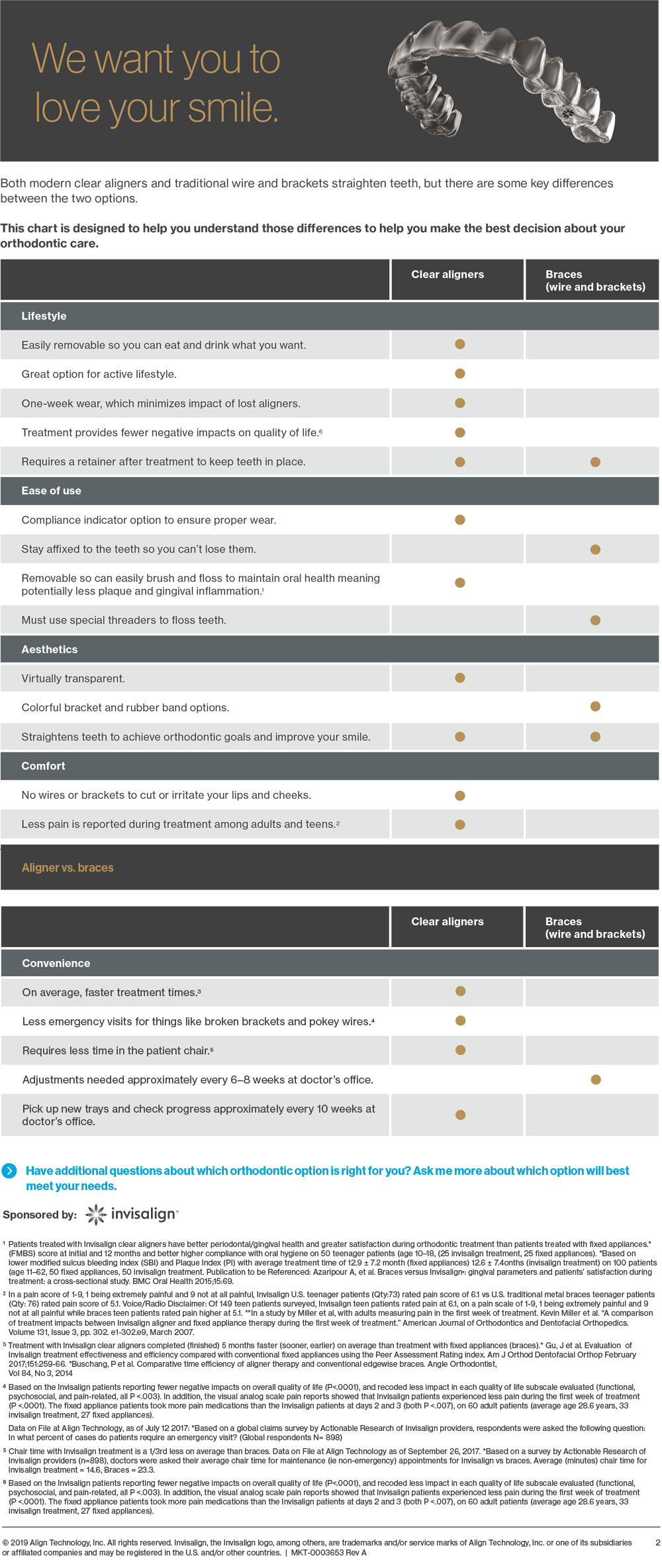
While conventional braces and Invisalign® treatment offer excellent solutions for straightening smiles, making a well-informed decision involves understanding your options in care.
The following chart outlines the key similarities and differences between Invisalign® treatment and traditional orthodontic appliances:
Frequently Asked Questions
Clear aligners are removable, virtually transparent trays that straighten teeth gradually, while traditional braces use fixed wires and brackets. Both are effective, but they differ in comfort, appearance, and daily convenience.
Yes. Clear aligners are removable, allowing you to eat and drink what you like without restrictions. With braces, certain foods may need to be avoided to prevent damage.
Clear aligners make brushing and flossing easier since they can be removed. Braces require special flossing tools and extra care to clean around wires and brackets.
Many patients report less discomfort with clear aligners because there are no wires or brackets to irritate the lips and cheeks. Braces may cause soreness, especially after adjustments.
In many cases, yes. Invisalign® patients often spend less time in the dental chair and have fewer emergency visits compared to braces, which require regular adjustments and occasional repairs.